ON DISPLAY / 3 min read
Base, box or dome: match the display to the model.
Choose the enclosure shape before comparing attractive product photos.
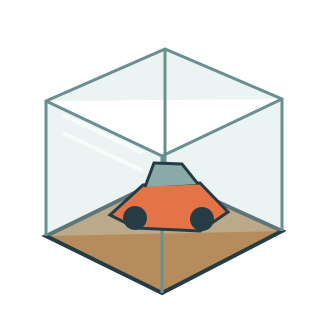
Decide whether you need an enclosure.
A display base defines a footprint and gives a scene a visual border. It does not provide a cover. If reducing dust exposure matters, compare enclosed cases instead. An enclosure still needs appropriate placement and cleaning; do not infer UV protection, airtightness or a weight rating from a clear plastic cover.
Compare the usable volume.
Tamiya Case C 73004 lists an internal space of 247 × 133 × 92 mm. That is more useful for checking a finished model than the case’s outer dimensions. A rectangular enclosure is straightforward to compare with a paper footprint, but antennas, angled wings and a raised stand can use the height or corners faster than expected.
Understand a curved cover.
A dome can suit a single figure or compact subject, but its widest internal diameter does not describe the available width at every height. Check the actual profile and leave clearance for the cover’s removal. A figure with a wide raised arm can fit the base circle while approaching the curved wall near its top. Ask for missing measurements rather than assuming a cylinder.
Make the final check after planning the finish.
Measure the whole display assembly, including scenic base and stand. Check how the cover lifts, where your hands will go and whether the shelf permits removal without tilting the model. Let paint and adhesives cure under their product instructions before enclosure. A covered case is useful only if the completed piece can enter and leave it without contacting fragile details.
Manufacturer references
Product facts were checked against these sources. The comparisons and planning advice above are editorial guidance.